Grease traps and local food service businesses
Santa Fe Springs lies southwest of Whittier. Before service, ask what the cleanout includes and which records to keep. Grease separates from wastewater inside the unit, and accumulated grease and solids can reduce its working capacity. If buildup reaches the outlet, sinks may drain slowly or back up during dishwashing.
A small indoor trap often sits beneath a sink or a floor cover. Ask about grease trap pumping for that equipment. An in-ground interceptor has access covers, and larger units are pumped with a vacuum truck. Call about grease interceptor pumping or a schedule for your kitchen in Santa Fe Springs.
Grease trap services in Santa Fe Springs, CA
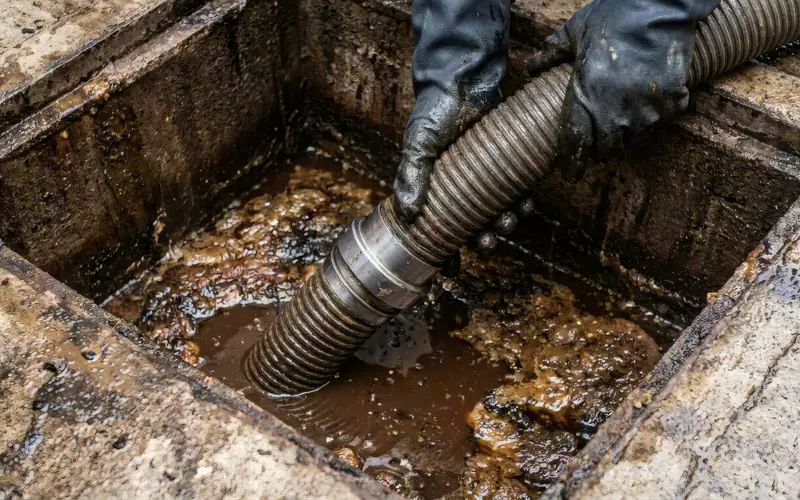
Grease Trap Pumping
Does the pump-out include settled food scraps as well as grease? Ask when you call, since solids left at the bottom take up space in the trap. Arrange grease trap pumping when the unit needs emptying. The service generally removes accumulated grease, wastewater and settled material.
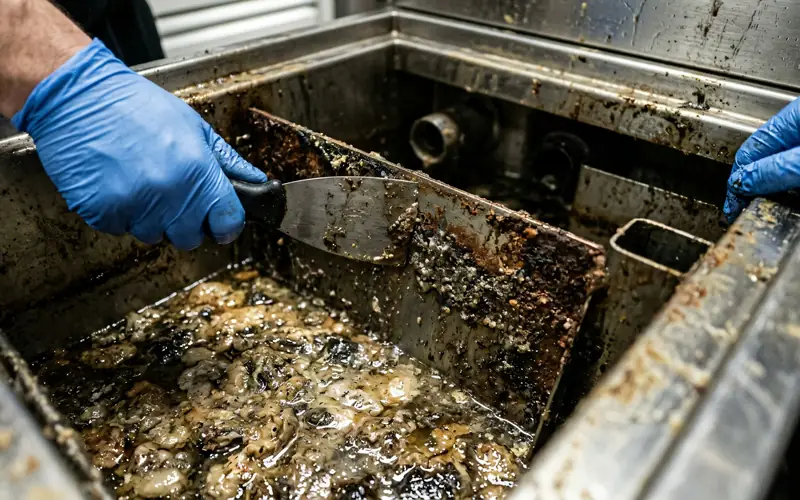
Grease Trap Cleaning
Unlike a pump-out alone, trap cleaning also addresses deposits stuck to reachable surfaces. Consider grease trap cleaning if the trap has been emptied but grease remains on the baffle or around the outlet. Clearing that residue helps keep the passage through the unit open for wastewater.
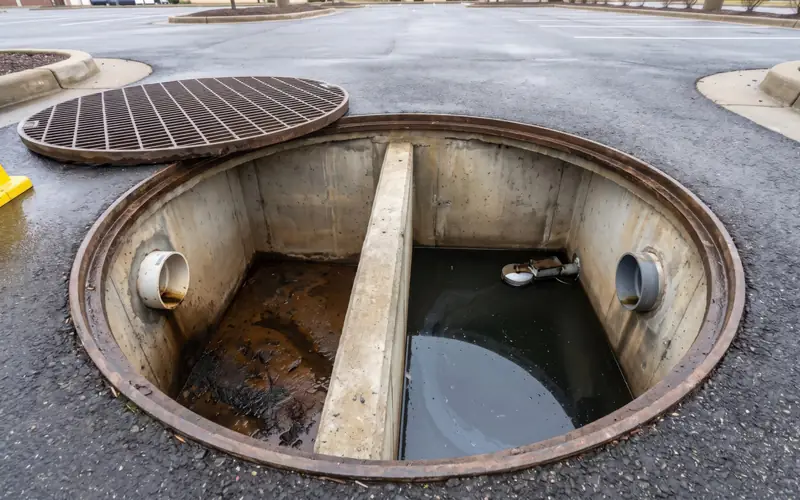
Grease Interceptor Cleaning
Grease interceptor cleaning generally includes removing the tank contents and clearing deposits from reachable walls, baffles and outlet components. A kitchen may need this service when grease remains attached inside after a pump-out. Buildup around the outlet can narrow the passage that carries wastewater out of the tank.
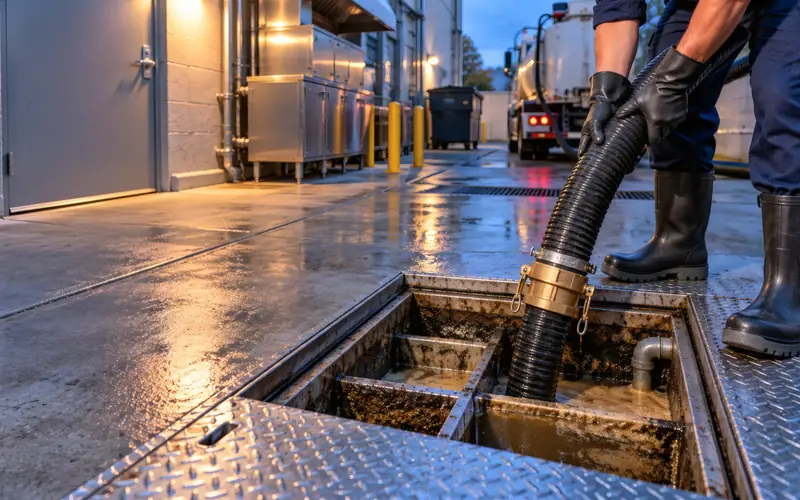
Grease Interceptor Pumping
A kitchen may have an interceptor with accumulated grease and settled material that needs removing. When arranging grease interceptor pumping, ask whether the provider removes the settled solids along with the liquid and grease. Pumping generally empties the tank so it has room to collect more material.
What to Have Ready When You Call
A few details can help the service provider assess your needs and discuss the right appointment.
- Your service address and ZIP code.
- Whether you have an indoor grease trap or an outdoor interceptor.
- The unit’s size, if known.
- Approximately when it was last pumped.
- Any backup, odors, slow drainage, or inspection deadline.
- The number of units or locations needing service.
Share what you know. You do not need every detail before calling.
Local grease trap requirements
Put each hauler’s service record with your kitchen paperwork after a visit. Local requirements usually come from the city or sewer district serving your address. Before deciding when to clean the trap, ask what service frequency the rules call for, what documentation you must retain and whether your kitchen needs a permit.
Nearby service areas
The same number reaches providers serving nearby areas. Businesses with more than one location can call once per site and enter each ZIP code.
Common grease trap questions
How often do Santa Fe Springs restaurants need grease trap pumping?
Pumping needs vary. Consider how much your trap holds, what you cook and how much water goes down the drain, along with local requirements. Your sewer utility may also set a schedule or a fullness limit, so ask it before you settle on one. Ask a provider to recommend timing for your operation.
Do providers serving Santa Fe Springs handle in-ground interceptors?
Many work on buried interceptors. Before calling to check availability, note whether your kitchen has that equipment or an indoor trap. Have the unit's capacity ready if you know it.
Who will I be speaking to when I call?
After the ZIP-code prompt, you will speak with an independent service provider serving your area. You can discuss the work, confirm pricing and availability, and book directly with that company. This website helps connect callers with service providers; it does not perform the cleaning.